WARD ← MERCEDES RESEARCH
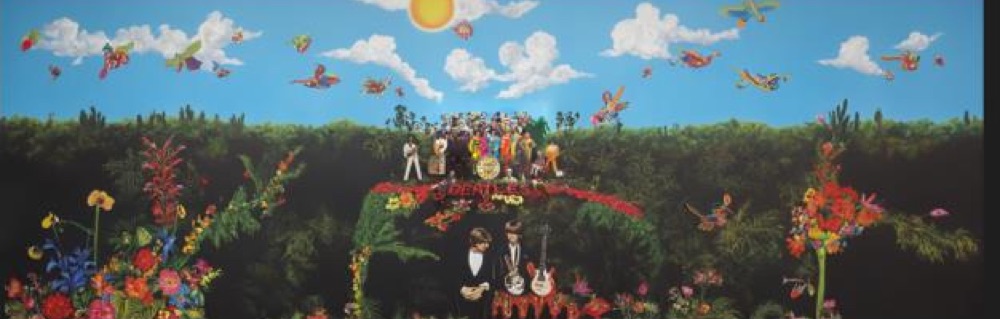
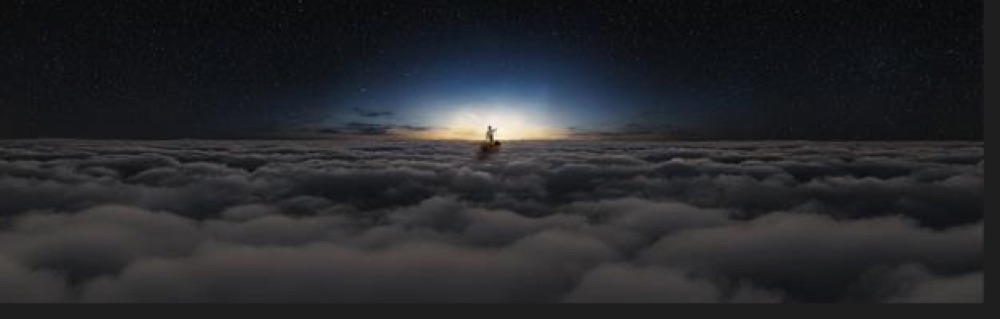
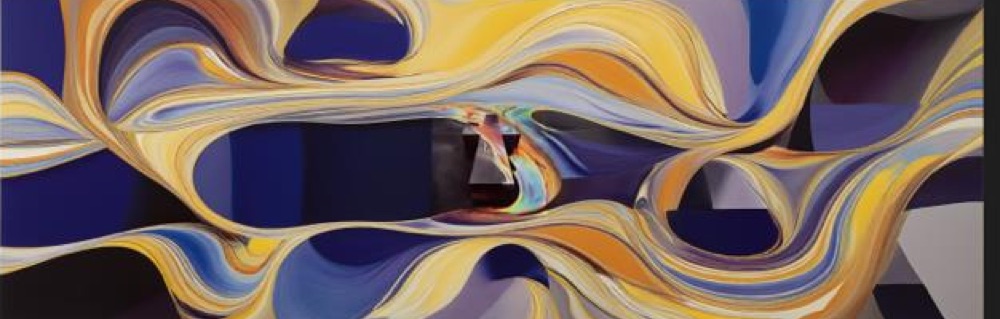
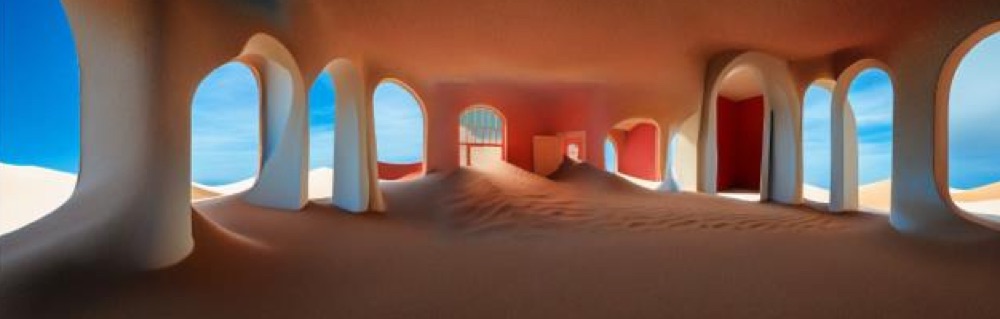
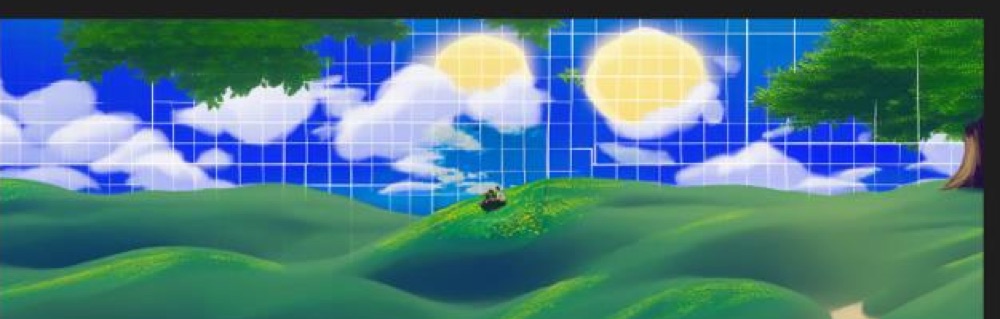
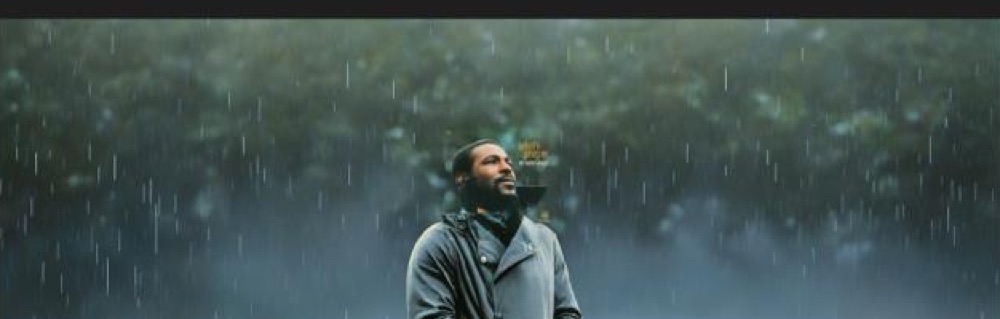
Outpainted album scene — The Endless River's punter carried across a starlit sea of cloud toward the dawn, painted to pillar-to-pillar aspect.
SPEC-02.03  ·  MBRDNA Silicon Valley · oneAI · 2024–2025
Mercedes-Benz

Album Outpainting A 640px square, painted across a metre of glass

Mercedes' pillar-to-pillar displays are vast. Album art is a tiny square. A generative pipeline paints the cover outward — into a full-cabin world — and ships it to the fleet, cached.

Enter

Conner Ward built a generative outpainting pipeline for Mercedes-Benz (MBRDNA Silicon Valley AI Labs, on the oneAI platform, 2024–2025) that paints a song's album cover outward to fill the car's pillar-to-pillar displays — cached at fleet scale and gated for driver distraction.

The problem: in-cabin screens keep getting wider while album art stays a small square, leaving most of the glass empty. The pipeline indexes what the fleet is playing weekly, has an LLM write a prompt from each cover's metadata, outpaints the square to the display's full aspect in a ComfyUI diffusion graph, and content-hashes and caches the result so the car never runs a model. A cabin-buck study (n=10) ranked the album-art background first against a system background and a user-chosen image, and a computer-vision complexity pass ties image richness to vehicle state. Conner's role was the generation pipeline, the functional prototype, and the distraction analysis.
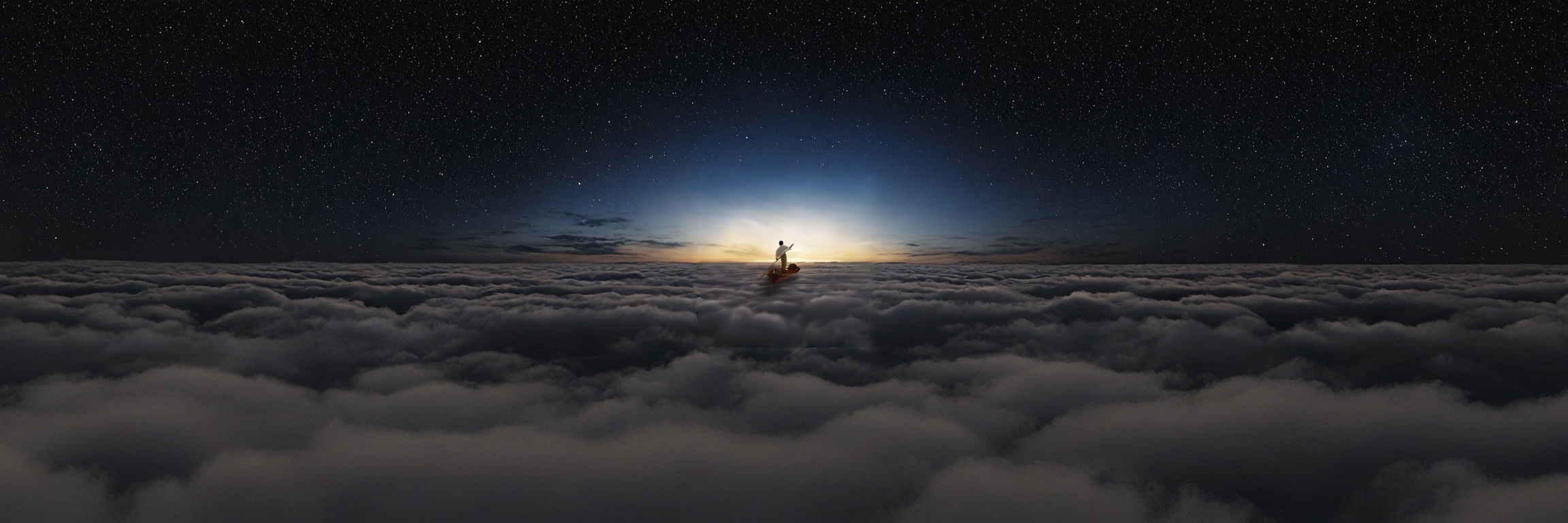
01 — The Problem

The screen got bigger every model year. The album cover stayed a square. So most of the glass shows nothing at all.

02 — The Idea

From a square to a horizon

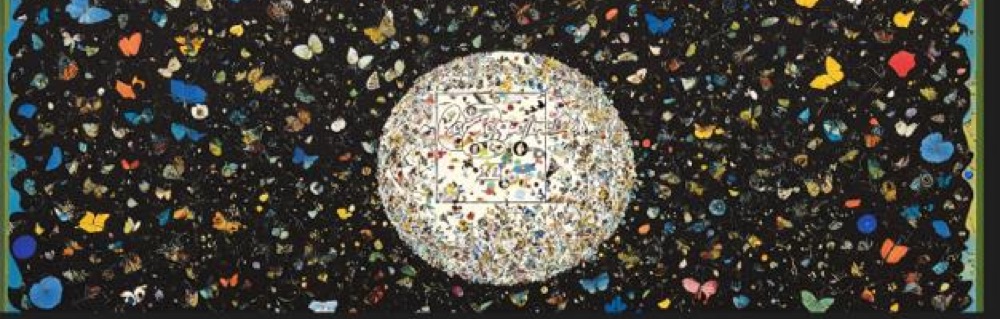
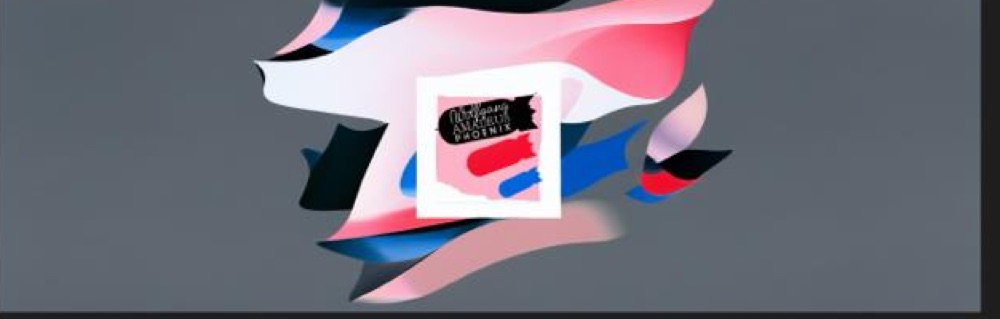
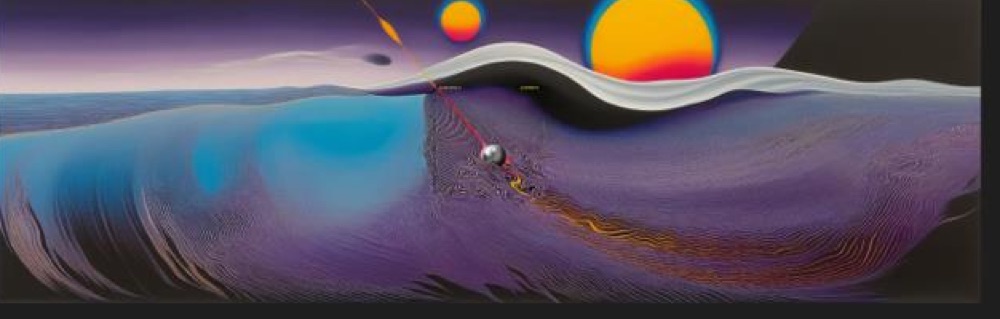
Take the cover the listener already chose and let a generative model paint past its edges — extending the artwork into a scene that fills the cluster, the centre stack, the passenger screen. Personalisation with zero user input; the music is the prompt.

InputAlbum cover · metadata
OutputFull-cabin background
User effortNone — it just plays
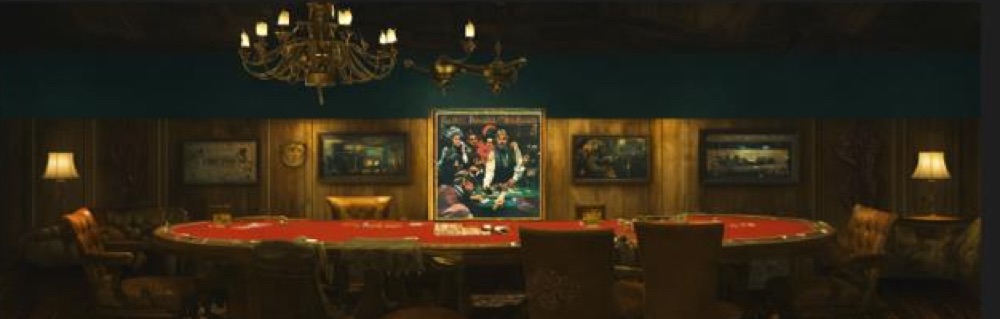
Cover → outpainted scene · centre display
03 — The Pipeline

The car never generates anything. It asks for a track; a cached image comes back.

A weekly job indexes what the fleet is actually listening to, generates the backgrounds ahead of time on oneAI, and stores them in the cloud. A content hash guarantees the image on the head unit is byte-for-byte the one the model produced.

01
Chart Indexer
What the fleet plays. Billboard · Spotify · Apple Music → the top-N tracks, refreshed weekly.Batch · weekly
02
Art & Metadata Retriever
One cloud call per track. Pulls the cover plus title, lyrics, reviews — the raw material for a prompt.Cloud API · cached
03
LLM Prompt Generator
Reads the art, writes the prompt. A positive prompt from the metadata, fused with static pre-prompts and a fixed negative.LLM · positive + negative
04
Outpainter
Paints past the frame. The cover is smeared into noise at the borders, then outpainted in a ComfyUI graph — Stability / Google diffusion backends.ComfyUI · diffusion
05
Cache → Fleet
Generated once, served forever. Results land in cloud storage; the car pulls the finished frame on demand.Cloud storage · hashed
Weekly · generated ahead of time
Billboard
Spotify
Apple Music
Top-N trackswhat the fleet plays
Art & metadata retrievercover · title · lyrics · reviews
LLM prompt+ pre-prompts · − static negative
Outpaintersmear → noise → diffusion
Cloud cachehashed · cover + prompt
In the car · on demand
Car · now playingtrack ID + metadata
ask by hash
Cloud cachefinished frame
cached image
Fleet displaycluster · centre · pillar-to-pillar
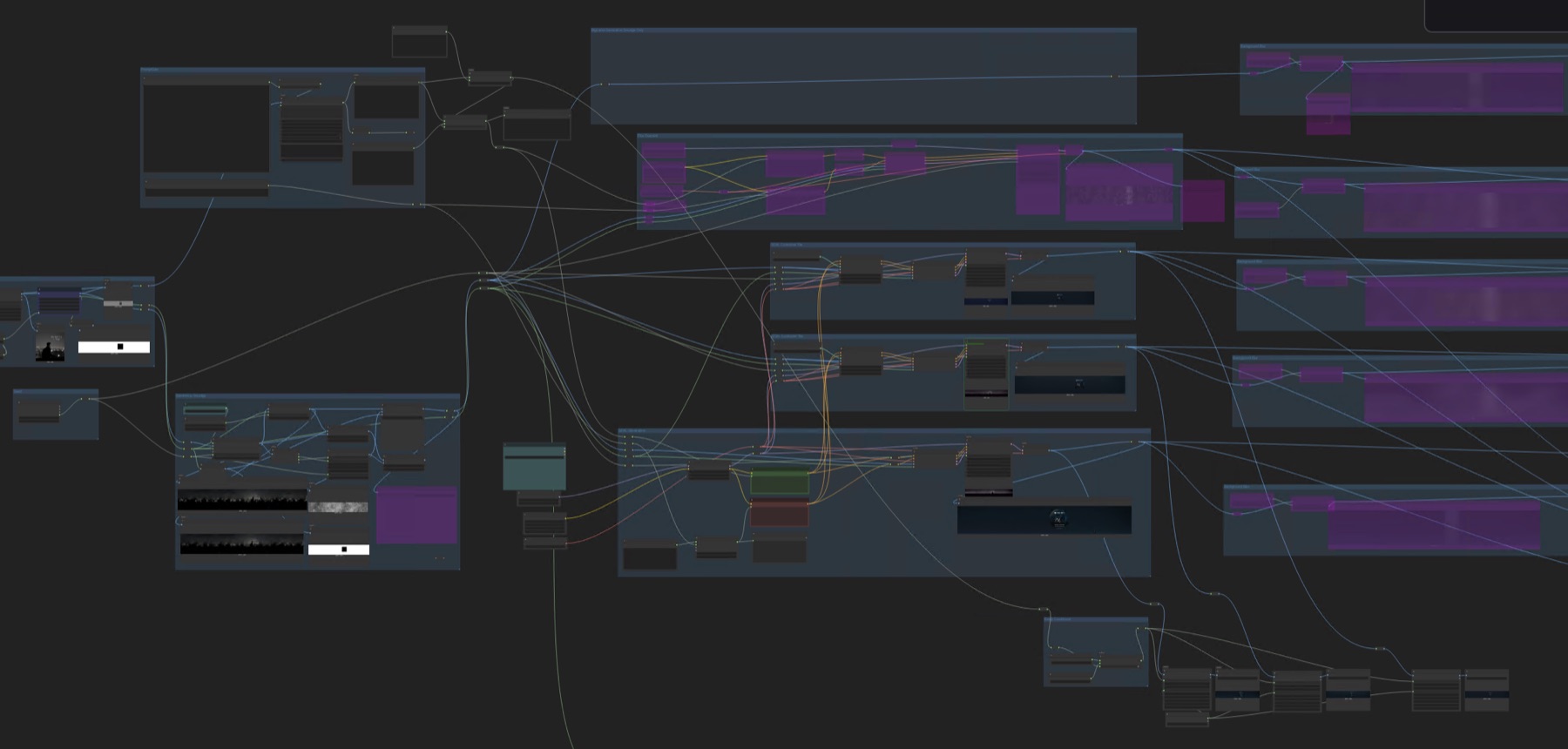
The ComfyUI outpainting graph — noise injection, mask, and diffusion nodes wired end to end.
The outpainting bench · ComfyUI node graph
04 — Studied with Users

We tested it on real people first.

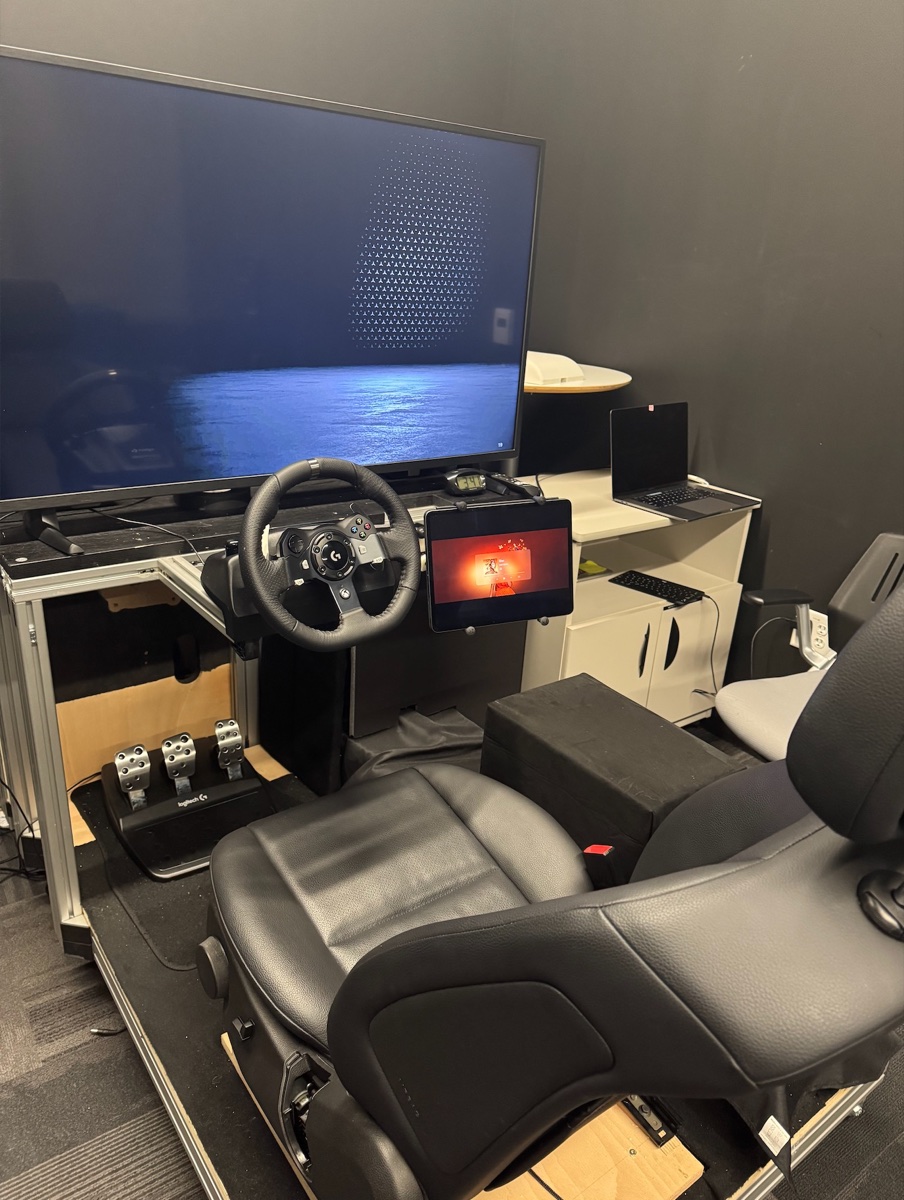
Before any of this reached a vehicle, we ran it past drivers in a cabin buck — seated at the wheel, the generated background on the centre display and a prototype on the console, rating each idea. Three ways to fill the screen went head-to-head: the stock system background, a user-chosen image, and the album-art outpaint.

The cabin-buck study rig — a driving-sim seat and steering wheel facing a display showing a generated ocean background, with an iPad prototype on the console.
Cabin-buck rig · in-seat evaluation

At the end, most ranked the album-art theme as their favourite.

GenAI Backgrounds study · n = 10 · lower average = more preferred

System background
136
2.5
Album art outpaint
73
1.3
User input
244
2.2
Ranked 1st 2nd 3rd
06 — Calm by Design

Beautiful is not the bar. Safe is.

A generated scene that energises a parked cabin can pull a driver's eyes off the road. So complexity is a dial, not a constant — tied to vehicle state. A computer-vision pass scores each background on highlights × edge density; the same cover resolves to a quieter image while driving and a richer one while parked.

Static metricHighlights × edge map
Temporal metricΔ pixels / second
GateVehicle state · P vs D
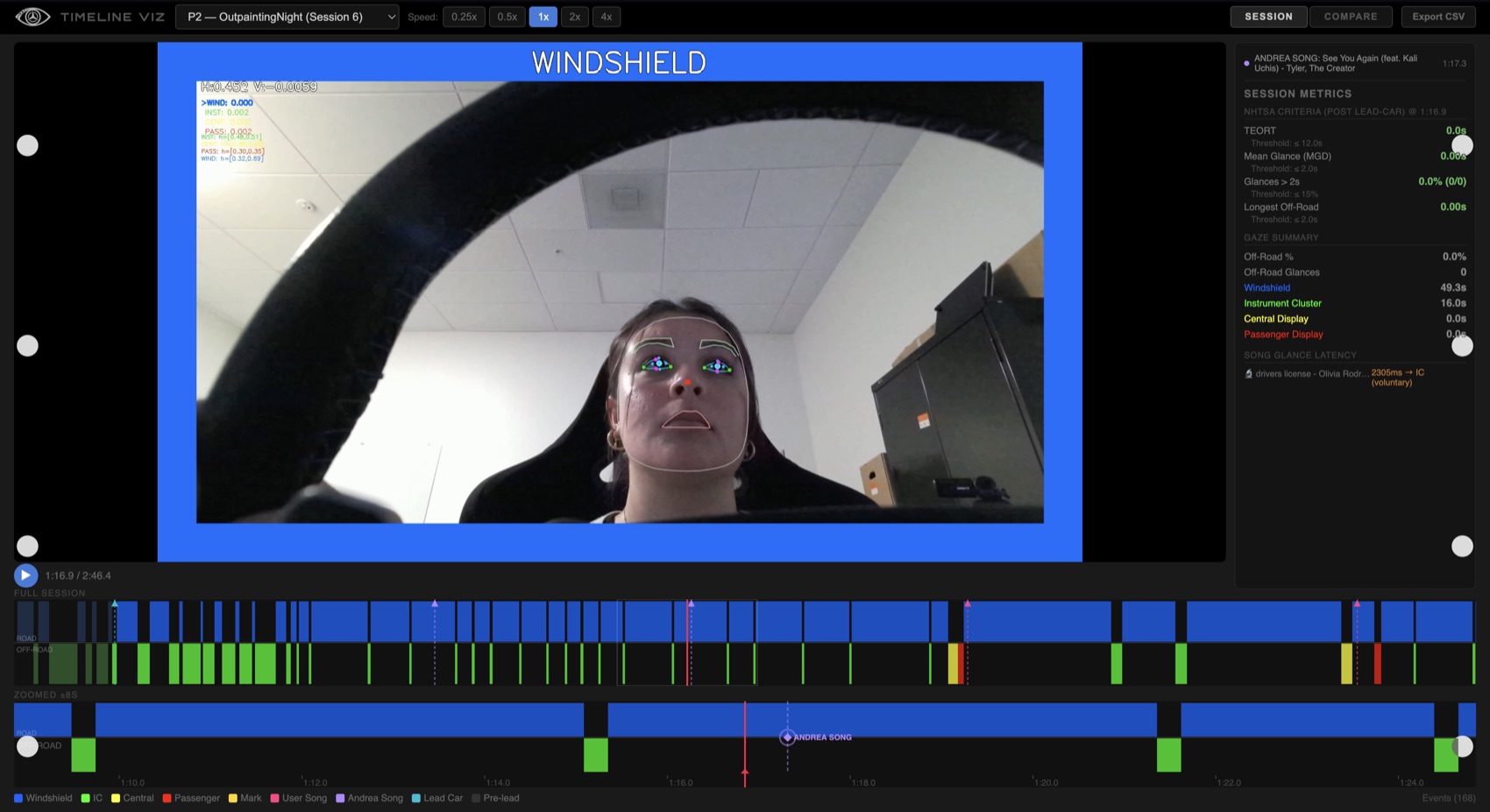
Custom eye-tracking review tool — driver-facing fisheye camera with gaze zones (windshield, cluster, central display) and a glance-allocation timeline.
Glance-allocation study · custom eye-tracking review tool
Driving · activeFallback · no AI
DrivingAI · level 01
Slowing · stoppedAI · level 02
ParkedAI · level 03
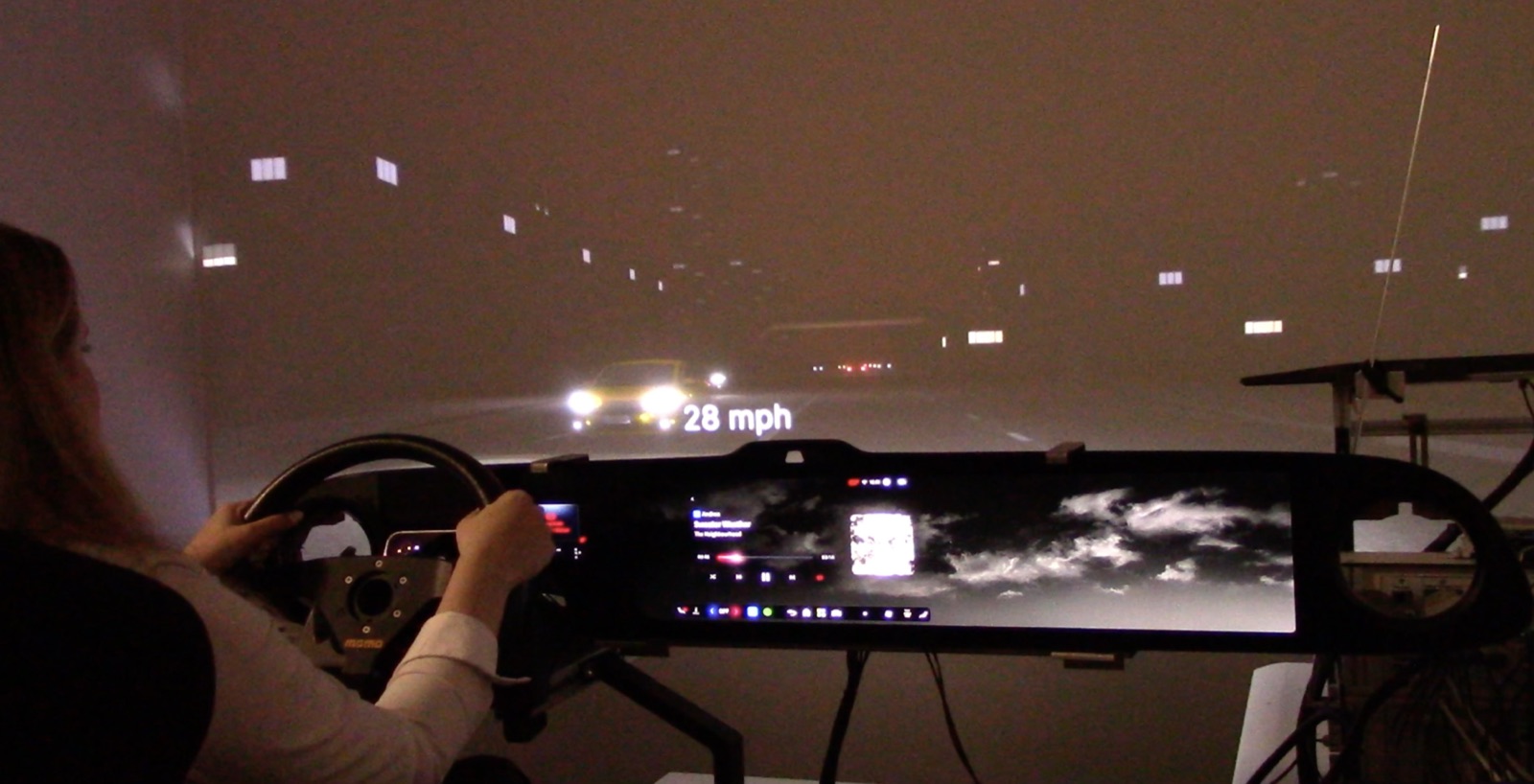
A participant drives a physical seat buck against a projected night-drive scene; the outpainted cloud background runs live on the pillar-to-pillar head unit, with a 28 mph speed overlay.
Sim rig · physical buck driven against a Unity night-drive — outpaint live on the HU, our own eye-tracking + wizard-of-Oz researcher control
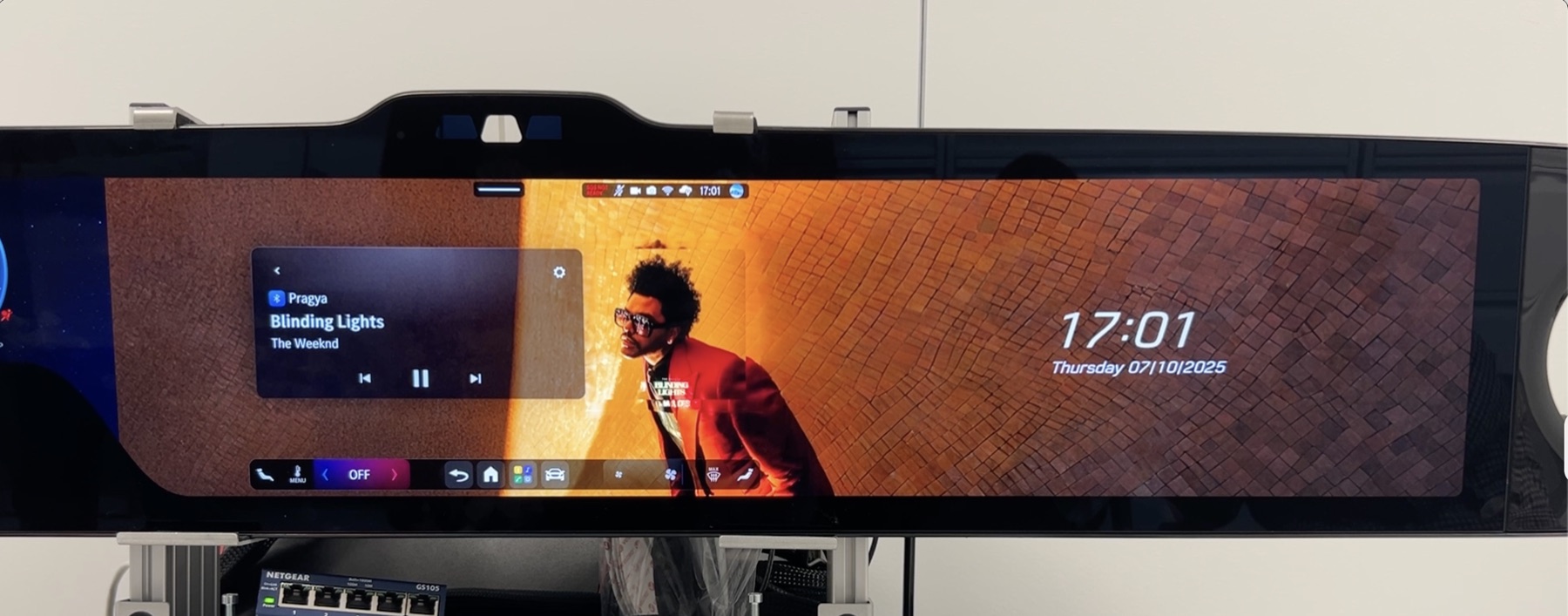
The outpainting running on a Mercedes head-unit bench — full pillar-to-pillar background behind the media card and clock.
06 — The Build
Running on a real head-unit bench.
07 — The Build

Android front end, ComfyUI behind it

A functional prototype on the MBUX-style head unit: cached backgrounds for the charts, live generation for anything off-list, and artful cross-fades between latent stages so the image resolves into place instead of popping. Built toward production deployment on the fleet.

Front endAndroid · head unit
BackendComfyUI · cached + live
TransitionLatent cross-fade
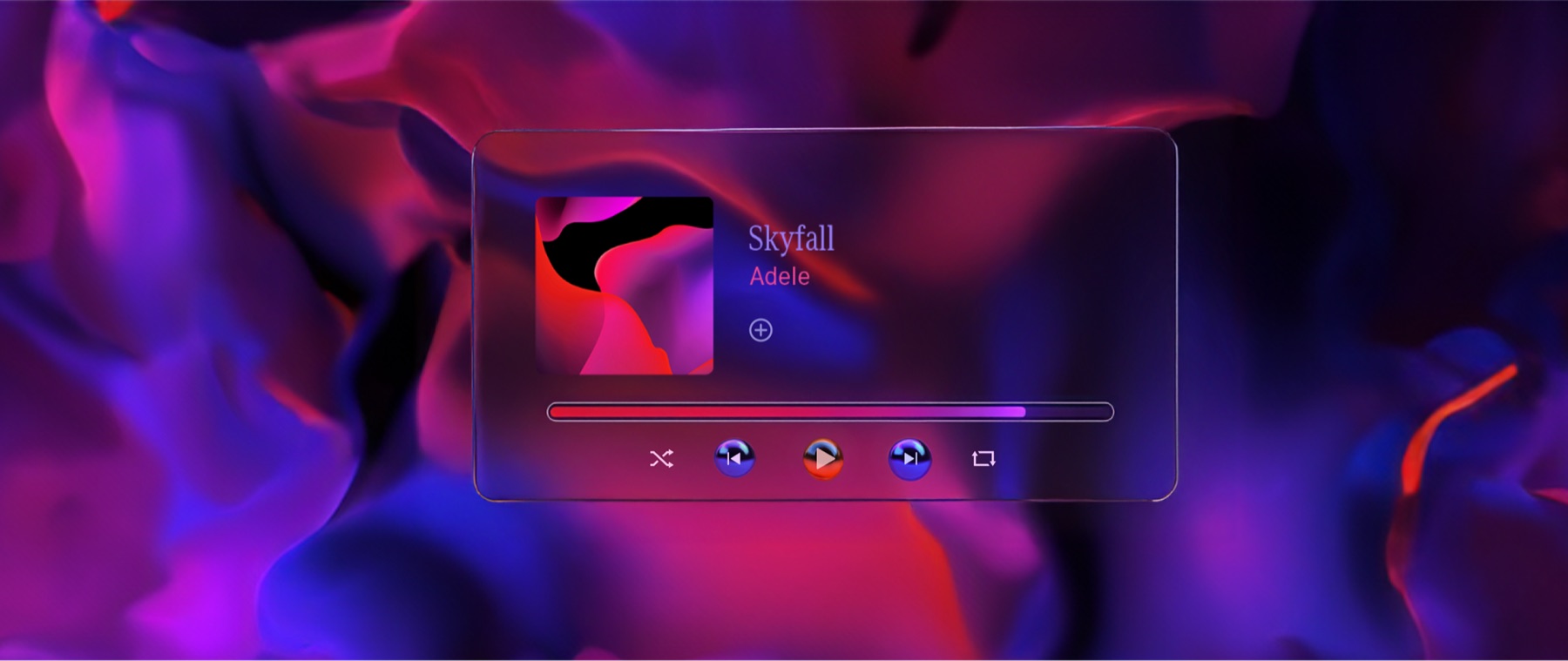
Glass media card over a generated background — the production look, full cabin.
Glass media card · outpainted background
08 — The Team

Built on oneAI, at the AI Labs.

Martin DurejaRD-NAU
Fabian BarteltRD-NAU
Mehdi MirabianRD-NAU
Conner WardPipeline · prototype · distraction

A feature development inside oneAI — Mercedes-Benz R&D North America's in-house AI platform — out of the Silicon Valley AI Labs (AIX). The ambition behind it: be the first automaker to productise generative pixel AI in the cabin.

FAQ

What is the Album Outpainting project?

Album Outpainting is a Mercedes-Benz research prototype (MBRDNA Silicon Valley AI Labs, oneAI platform, 2024–2025) that generatively outpaints a song's album cover art outward to fill the car's pillar-to-pillar displays. A cached, fleet-scale pipeline generates the backgrounds ahead of time and serves them to the cabin on demand, gated for driver distraction.

What was Conner Ward's role on Album Outpainting?

On the Mercedes-Benz Album Outpainting project, Conner Ward built the generation pipeline, the functional prototype on an Android head-unit front end, and the distraction analysis — including a cabin-buck user study (n=10) and a custom eye-tracking review tool — working alongside team members Martin Dureja, Fabian Bartelt, and Mehdi Mirabian.

What was the outcome and tech stack?

In a Mercedes-Benz cabin-buck study, drivers ranked the album-art outpaint background first (average rank 1.3) over a system background and a user-chosen image. The stack used a ComfyUI diffusion graph (Stability / Google backends), an LLM to write prompts from album metadata, a content-hashed cloud cache, and an Android head unit, with a computer-vision complexity pass gating imagery by vehicle state.