DANCEHACK
Texture-painting timeline for dancer motion. Built at Dancehack 2026 under choreographer Merli Guerra.
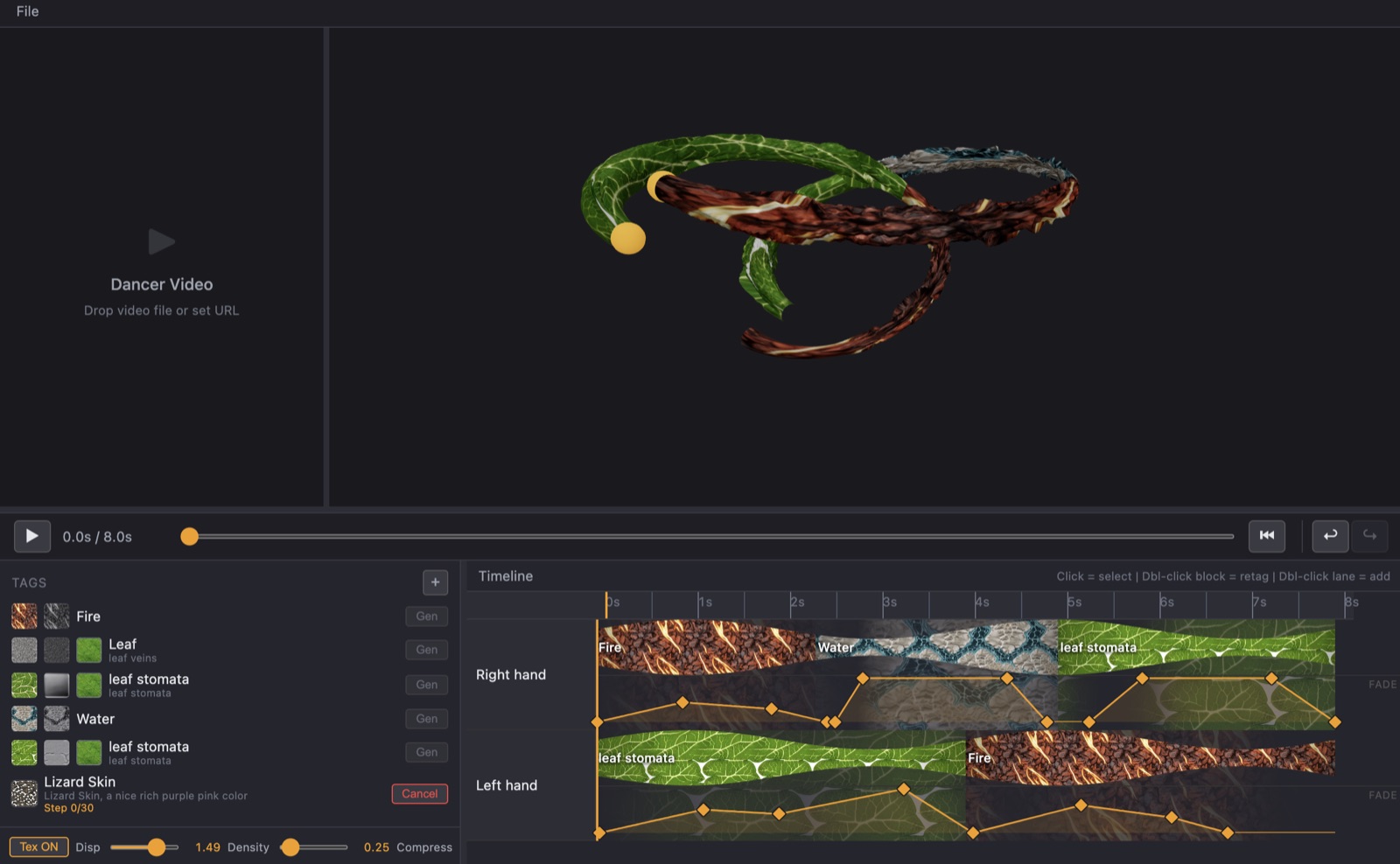
Conner Ward built dancehack, a texture-painting timeline that turns recorded dancer motion into texturable, re-animatable 3D geometry, created at Dancehack 2026 with choreographer Merli Guerra as project lead.
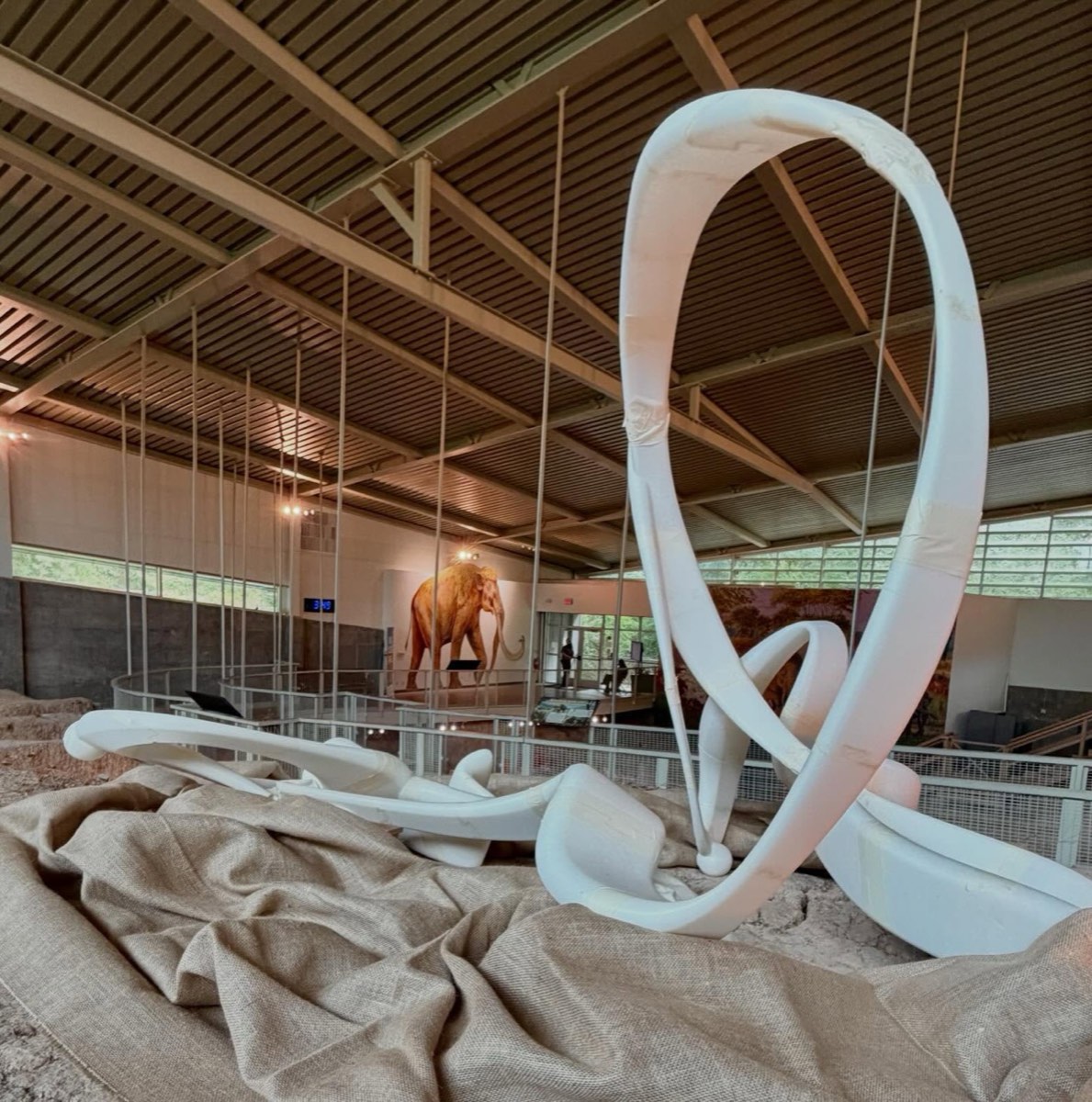
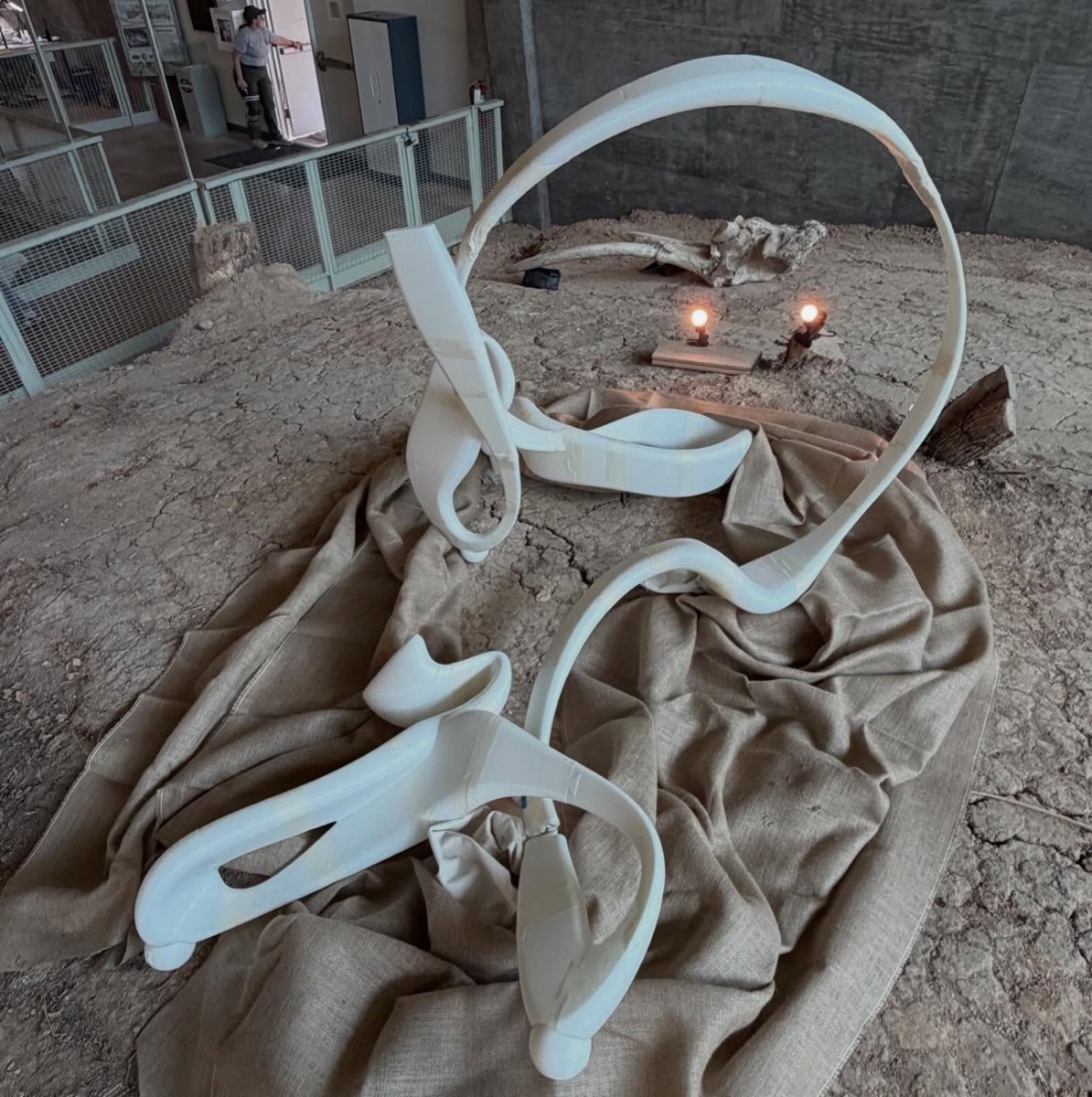
A custom tool for translating recorded dancer movement into texturable 3D geometry that can be re-animated and re-skinned for video and installation. The dancer's path becomes a brushstroke; an NLE-style timeline picks what it's painted with. Tag the strokes, hit Gen, and a local diffusion pipeline produces tileable albedo and PBR maps for each tag. Built during Dancehack 2026 — an interdisciplinary hack week pairing engineers with choreographers — with artist Merli Guerra as the project lead.
Stack
- React + Vite + TypeScript
- Frontend shell — the timeline, tag library, viewport overlays.
- react-three-fiber + drei + three.js
- 3D viewport. Each path is a tube; tube radius is driven by per-point velocity so the geometry encodes movement energy before any texture lands on it.
- Custom NLE timeline
- One track per path; tagged segments per track; per-track fade-keyframe lane for displacement/opacity over time. Built from scratch — no library quite matched the segment-plus-keyframe model.
- FastAPI generator service
- Local Python service for texture generation, called per-tag from the frontend.
- SDXL Base 1.0 + IP-Adapter
- Albedo (color) generation from text prompt + optional reference image.
- Circular-padded UNet + VAE
- Modifies SDXL's conv stack so left-edge attends to right-edge — produces seam-free horizontally tileable textures on the first try, no manual seam-fix pass.
- CHORD (Ubisoft La Forge)
- Neural PBR estimation — albedo → normal, height, roughness. One pass per tag.
- ComfyUI workflows
- Offline: video → PLY point cloud and batch images → PLY, for the path-data ingestion side.
Process
The brief from Merli was: capture a dance, get something I can re-skin and re-light. The first decision was the abstraction — should the tool consume mesh, or path data? Mesh closes off authoring; paths leave the geometry generative. So the app's input contract is { id, name, points: { t, x, y, z, velocity }[] } and the tubes are built per-frame. The mesh→paths conversion is upstream, in ComfyUI workflows that consume captured video.
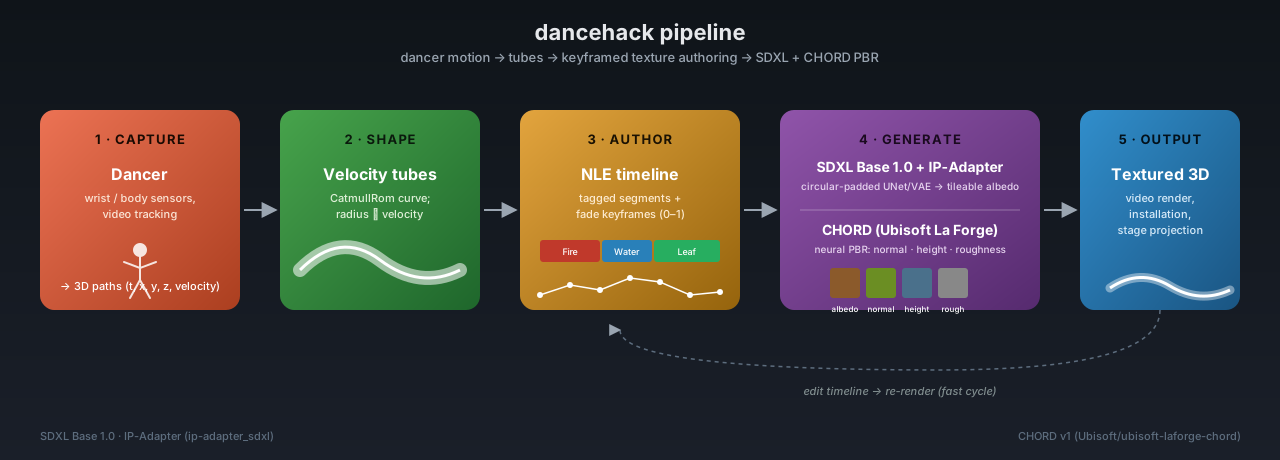
The artist already thinks in After Effects and Premiere, so the authoring surface is a familiar NLE: tagged segments on tracks, fade keyframes underneath. That keyframe lane drives displacement / opacity over time, so a single tube can fade between two textures without leaving the timeline. Everything to the right of "Author" in the pipeline is intentionally invisible — the diffusion stack only surfaces as a Gen button per tag and an inline progress counter.
Tileability is where the texture stack earns its keep. Wrap a non-tileable albedo around a tube and the seam is the first thing you see. Circular padding on SDXL's UNet + VAE modifies attention inside the conv stack so the left edge attends to the right — the model never "knows" it's painting a finite rectangle. Result: tileable on the first generation, no inpaint pass, no manual seam fix. IP-Adapter conditions on a reference image when the artist drops one, so a Lizard Skin tag actually looks like the reference photo, not just the prompt.
PBR is delegated to CHORD (Ubisoft La Forge) rather than asked of the artist. The handoff is: albedo from SDXL → CHORD → normal, height, roughness in one pass. The artist never sees a material editor.
FAQ
What is dancehack?
dancehack is a tool by Conner Ward that translates recorded dancer movement into texturable 3D geometry that can be re-animated and re-skinned for video and installation. A dancer's captured path becomes a brushstroke on an NLE-style timeline, and a local diffusion pipeline generates tileable albedo and PBR maps for each tagged stroke.
What was Conner Ward's role and how was dancehack made?
Conner Ward built dancehack at Dancehack 2026 — an interdisciplinary hack week pairing engineers with choreographers — with artist Merli Guerra as project lead. He designed the React + Vite + TypeScript frontend, the react-three-fiber 3D viewport where each path is a velocity-driven tube, a custom NLE timeline, and a FastAPI generator service driving SDXL Base 1.0 with IP-Adapter for textures.
How does dancehack make seamless, tileable textures?
dancehack uses a circular-padded UNet and VAE that modify SDXL's convolution stack so the left edge attends to the right edge, producing seam-free horizontally tileable textures on the first generation with no manual seam-fix pass. CHORD (Ubisoft La Forge) then estimates normal, height, and roughness maps from each albedo in one pass.